From Handbill to House List: The Changing Job of a Screening Programme
A screening programme can guide guests, then become a keepsake. Learn which details to print, what to leave out and how to reuse it thoughtfully.
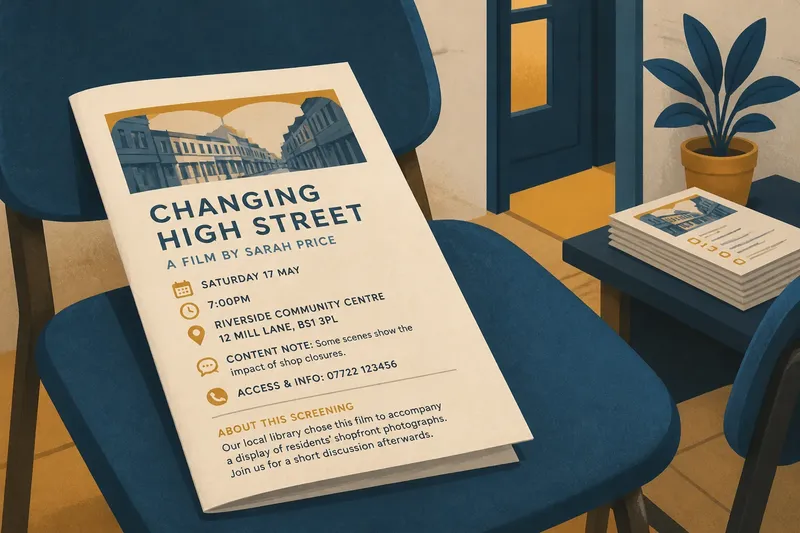
What should a screening programme do after it has told people what is on? A good one answers the practical questions first, then gives guests a small record of the evening they may want to keep. The trouble starts when a handbill tries to do both jobs without deciding which details matter.
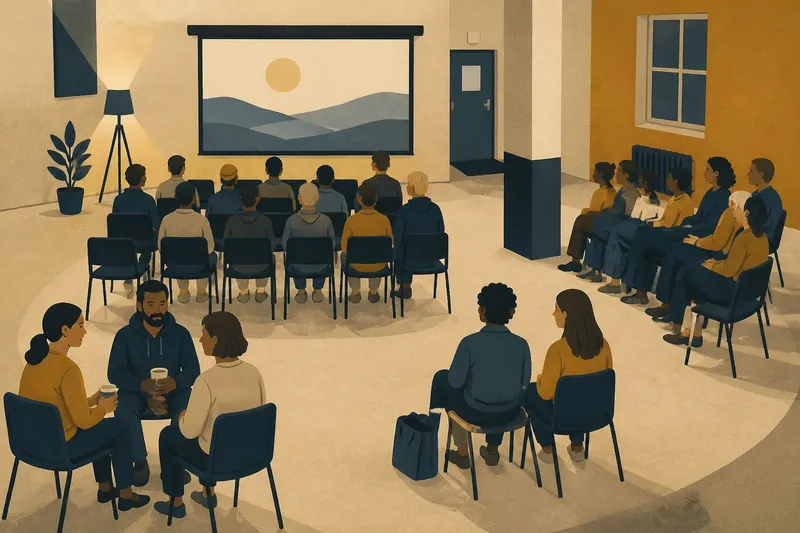
For a community screening, a programme might be a folded sheet on a chair, a card beside the door or a short page shared digitally. Its format can change; its purpose should stay clear. Treat it as a useful object with a second life, not a miniature catalogue that must preserve everything.
A screening programme becomes cluttered when it tries to be a poster
The first common problem is a sheet crowded with the film title, a long description, organiser biographies, venue notes, discussion prompts and acknowledgements. This usually happens because every contributor wants their detail included, while nobody has chosen what a guest needs at a glance.
Start with the information that helps someone arrive and settle: the film title, screening date, venue, start time, a brief content note if useful, and a contact or access detail relevant to the event. Add a short description only if it helps people understand what they are about to watch. Move extended credits or background reading elsewhere, such as a linked page.
Then read the sheet as if you were entering the room for the first time. Can you find the title and practical details quickly? If not, remove decorative copy before shrinking the type. A programme should be readable in ordinary room light, not merely elegant on a laptop.
A handbill loses its usefulness when essential details are missing
The reverse problem is a handsome card that tells guests almost nothing. Organisers often assume a spoken welcome will fill the gaps. It may, but late arrivals, people who need to leave quietly and anyone who has forgotten an announcement still benefit from printed information.
Give the film a clear identity: title, director where known, and year or country only when those details are verified and relevant. Include the screening’s date and venue so the sheet remains intelligible if someone takes it home. If the event is part of a recurring series, name the series and give a simple way to find future dates.
Avoid putting details on the programme that are likely to change before the event unless you can update them. For instance, an exact running time can be useful, but a speculative end time may mislead guests if introductions or a discussion are planned. Prefer a clear note about the evening’s structure when timing is uncertain.
A keepsake feels thin when it records only the film title
Once the practical work is done, the programme can carry a trace of the gathering. The useful question is not how to make it sentimental; it is what a guest might genuinely want to remember. A short note about why the group chose the film, the name of the host organisation or a prompt that opened the post-screening conversation can make the paper feel particular to that evening.
Keep this material brief and specific. A single sentence about the local group’s interest in the film says more than a paragraph of generic praise. If guests contributed a question or selected a short companion text, credit that contribution with permission. Leave space around it so the practical details remain easy to scan.
Say you are hosting a neighbourhood screening of a film about a changing high street. The card already carries the title, venue and date; you add one line explaining that the local library chose it to accompany a display of residents’ shopfront photographs. That note gives the sheet a memory of this particular gathering without turning it into a report.
Reusing a programme gets awkward when event details are treated as timeless
A saved programme can be useful for planning another screening, but an old copy is not automatically a ready-made template. Venue addresses, contact details, access arrangements and permissions can change. Reusing stale information is especially easy when a sheet looks polished and complete.
Keep a clean digital master separate from the version printed for guests. Before adapting it, check each practical detail and remove anything that belongs only to the earlier evening. Retain adaptable elements such as the type hierarchy, a short series description or a blank space for the event’s own note. Do not carry over a film synopsis or image simply because it is already in the file; confirm that its use is appropriate for the new occasion.
For a paper archive, write the event date on the back or keep the programme with a simple record of the venue and organiser. This small bit of context helps a future volunteer distinguish a useful reference from a current announcement. The point is not to preserve every draft, but to make the surviving version understandable.
Which details belong on a screening programme?
Should a programme include a full synopsis?
Usually, a short description is easier to read and less likely to reveal more than a guest wants to know. Put a longer synopsis on a separate page or link if people need it for choosing whether to attend.
Are film credits worth printing?
Include the director and other credits that help identify the work or matter to the event’s purpose. A dense block of production details rarely helps a guest settle into the evening, so keep extended credits somewhere else.
What makes a programme worth keeping?
A clear date, the film’s identity and one distinctive detail about the gathering give a saved copy context. A generic slogan or a crowded list of acknowledgements is usually less useful than a concise note with a real connection to the event.
Can the same programme design be reused?
Yes, if you treat it as a layout rather than a finished document. Keep the visual structure, then review the wording, permissions, access information and event details afresh for each screening.
Good intentions can produce details nobody needs
It is not worth printing a lengthy account of the organising process, every discussion prompt or an elaborate recap of the film. Those additions can make a small programme feel like homework and obscure the details guests came for. If the group wants a fuller record, make a separate note after the event and share it with people who ask.
For a screening programme, think in two passes: first, help the guest use the sheet during the evening; then decide what small detail will make it meaningful later. Keep those jobs distinct, and a modest handbill can become a house list people are glad to find in a book or folder, rather than paper they cannot place.